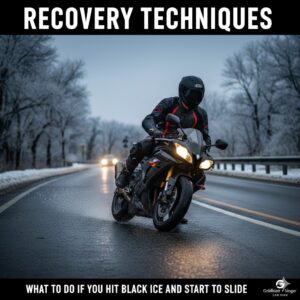
Winter roads can look dry and safe right up until they are not. For riders, that thin, invisible sheet of black ice is one of the most unforgiving surprises on the street. Long before anyone calls the Goldblatt + Singer law firm after a winter motorcycle wreck, a few recovery techniques can make the difference between a scare and a serious crash.
Understanding What Black Ice Really Is
Black ice forms a thin, smooth layer that lets the dark pavement show through. That is why it blends in so well with the road, especially at night or in low light.
It often appears when temperatures hover around freezing. Melted snow, light drizzle, or run‑off from bridges and overpasses can refreeze as traffic thins out.
Because you cannot always see it, you have to ride as if it might be there. That means building in extra space, gentler inputs, and a different mindset whenever conditions are close to freezing.
The Moment You Feel The Slide Start
On a motorcycle, the first sign of black ice is often a sudden lightness. The bars may feel vague, the rear tire may squirm, or both wheels may feel like they are floating. You may also notice the engine revving without the bike accelerating as expected.
The most important reaction is the hardest: do not panic. A stiff, panicked squeeze on the brakes or a sudden chop of the throttle often finishes what the ice started. Your goal is to give the tires a chance to regain grip, not overload them.
Throttle, Brakes, And Clutch: Gentle Hands Only
If you are already on the throttle when you hit ice, roll off smoothly rather than snapping it shut. A sudden engine-braking spike can loosen the rear tire even further. Aim for a slow, controlled reduction in power.
Stay away from the front brake unless you are sure you are back on solid traction. On ice, a front‑end lockup almost always leads to a quick low‑side crash. If you have to use any brake at all during the slide, favor the rear with a feather‑light touch.
The clutch can be a useful tool. If the rear tire is spinning or chattering, a quick, smooth pull of the clutch lever can disconnect the engine and let the wheel roll freely. A rolling wheel is more likely to recover grip than one being driven or braked hard.
Steering And Body Position While Sliding
Keep your arms relaxed and your hands light on the bars. Let the bike make small corrections under you instead of wrestling it.
Look where you want to go, not at the hazard or the edge of the road. Your eyes guide your body and your micro‑movements. Target fixation on a guardrail or an oncoming car will only pull you toward it.
Try to stay centered and loose rather than leaning aggressively. If you were already leaned over in a turn when you hit ice, gently “stand” the bike up a bit by bringing your body more upright. Reducing the lean angle gives the tires a slightly better chance to bite if they find a patch of grip.
If You Cannot Save It, And A Fall Is Coming
If you feel the bike going out from under you, do not try to catch it with a locked leg. Letting the machine go can spare your knees and ankles from twisting forces that they cannot handle. Protect your head and core by tucking your chin and bringing your arms in rather than reaching out stiff‑armed.
Once you are sliding, try to stay on your back or side rather than tumbling. Do not try to stand up until you are completely stopped and sure that traffic has seen you. Getting up too early can put you right back in the path of moving vehicles.
Protective Gear And Bike Setup That Help
The correct equipment does not stop a slide but may influence the result. High-quality gloves, boots, armored coats, and pants made of abrasion-resistant material are the barriers against friction loss. A properly fitted full-face helmet is definitely a must in winter conditions.
Cold-weather tires made with friendly compounds and properly inflated provide you with a larger margin of safety before grip breakage. Worn or overinflated tires are extremely unforgiving on slippery surfaces.
Bicycle configuration may also contribute to improved riding. Easy-engaging clutches, well-maintained brakes, and well-adjusted controls all facilitate gentle inputs.
Reading The Road Before It Bites
Prevention is still your strongest tool. Pay attention to temperature, recent weather, and the pavement’s condition. Shiny, dark patches that look “wet” when the air is below freezing deserve real caution.
Slow down before bridges, shaded curves, and intersections where melted snow from sidewalks or plowed piles may re‑freeze. Leave extra following distance so you do not have to brake hard if traffic slows. Staying more upright through turns and rolling on the throttle more gently can keep demands on your tires reasonable.
If conditions feel sketchy enough that you are constantly tense, consider whether the ride is necessary. Choosing a different route, delaying a trip, or taking four wheels instead of two on the worst days is not a defeat.
Conclusion
In accidents involving another driver with unfavorable speed, distance, or behavior factors, fault determination can be complex. This is particularly the case when the road surface is poor, and participants’ memories are unclear. In such incidents, riders sometimes turn to the Goldblatt + Singer law firm or other specialists to get a clearer picture of how the law addresses winter hazards and driver choices. At the same time, they themselves focus on recovering and rebuilding their riding confidence.

