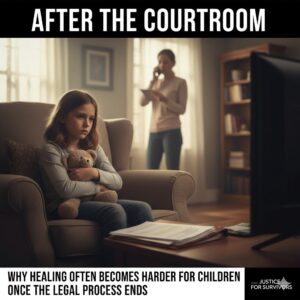
When a legal case ends, many people assume the most challenging part is over. For children who have experienced abuse, the end of court involvement can bring a new set of challenges. Families working with a firm dedicated to justice for survivors of abuse often discover that healing becomes more complicated once the spotlight fades.
The Courtroom Creates Structure and Attention
During a legal case, everything feels structured. Appointments, check-ins, and support services are clearly scheduled. Children are surrounded by adults who are focused on their safety and well-being.
That attention can feel stabilizing, even when the process itself is stressful. There is a sense that someone is watching out for them. When the case ends, that structure often disappears suddenly.
The Abrupt Shift After a Case Concludes
When the court case ends, support can fall away fast. Calls stop, meetings end, and the steady stream of check-ins can slow to a trickle. A child can feel like everyone has moved on while they are still trying to make sense of what happened.
This sudden quiet can feel confusing. A child who has grown accustomed to regular attention may wonder whether what happened still matters. That uncertainty can reopen emotional wounds.
Loss of External Validation
When a case is active, the seriousness is hard to miss. Adults pay close attention, take notes, and treat the child’s words as important. For many children, that visible response reinforces a simple message: they were believed.
When the case ends, that outside validation can fade quickly. Adults may stop talking about safety plans or what happens next. Without those cues, some children begin to doubt their own experience, and that doubt can make recovery.
The Pressure to Be “Done” With It
After a case ends, children often feel pressure to move on. Adults may unintentionally encourage this by avoiding the topic. The message can feel like the chapter is closed.
For a child still processing, that pressure can be painful. They may stop talking about feelings to avoid upsetting others. Silence becomes a coping strategy.
Changes in Family Dynamics
A legal case does not just affect the child; it affects the whole household. When the case ends, routines shift again, and everyone tries to find a new rhythm. Parents often push for normalcy because they are exhausted and want life to feel steady.
Kids usually pick up on that right away. They may keep their struggles to themselves so as not to upset the adults who are already stressed. That can leave them carrying a lot of feelings alone, even when they still need support.
Trauma Can Surface Later
Trauma does not always show itself right away. Some children seem fine during the legal process. Symptoms may appear months or even years later.
Sleep problems, anxiety, or changes in behavior can emerge. Without ongoing support, these signs may be misunderstood. Early awareness makes a difference.
The Drop in Professional Support
During a case, professionals are often closely involved. Therapists, advocates, and coordinators may check in regularly. Once the case ends, that contact can taper off, and support may be harder to access.
Waitlists and limited resources can make follow-up care difficult. Families may have trouble finding ongoing help, and children can feel left behind by systems they had started to trust.
Why Consistent Therapy Matters
Healing from abuse takes time. Many children benefit from staying with the same therapist for a longer stretch. Trust builds slowly and often comes from routine and a familiar, steady relationship.
When therapy ends too soon, progress can stall or backslide. New feelings may show up months later, and kids still need a safe place to work through them. Consistent support helps those gains last.
Helping Children Make Sense of the Ending
A child may not understand why the case stopped or what “over” even means. Simple, clear explanations can reduce fear and confusion. Knowing what happened and what to expect next helps the child feel less powerless.
These conversations should not be one-and-done. As kids grow, they understand things differently and may have new questions. Keeping the door open helps them make sense of the ending over time.
The Role of Caregivers After Court
Even after the legal process is over, caregivers are often the steady presence in a child’s life. What matters most is showing up—especially in small, everyday ways. You don’t need perfect words. Listening without pressing for details can help a child feel safe and supported.
Caregivers also shape the environment around a child. Staying patient, calm, and open can make it easier for a child to share when they’re ready. It can also help to remind them that healing takes time, and that there’s no “right” timeline. Children tend to do best with predictable routines and reassurance they can rely on.
Community and School Support
Once the court ends, school and community settings can help a child feel grounded again. Teachers, counselors, and coaches are often the first to notice when something is off—missed school, lower grades, withdrawal, tension, or a child who seems jumpy or on edge.
When caregivers share what they feel comfortable sharing, it can give school staff the context they need. That way, the child gets support instead of confusion or misread behavior.
Looking Beyond Legal Outcomes
Accountability matters, but it isn’t the end of the story. A case may close while a child is still working through fear, anger, or grief months later. Kids need room to heal at their own pace, without feeling pressured just because the legal process has finished.
Progress doesn’t always match a court timeline. It often looks like steady, long-term change—feeling safer, rebuilding trust, and finding stability again. That kind of healing continues well after the courtroom.
Final Thoughts
For many families, the period after court can feel surprisingly tricky, especially when outside attention fades. Children still need patience, validation, and consistent support during this stage. With the right help—and a focus on long-term care—families can keep moving forward, even after the case is over.

