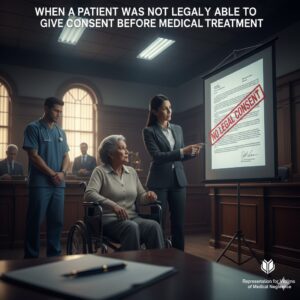
Medical treatment usually begins with a conversation and a clear yes. Problems arise when a patient cannot legally agree to care. In those situations, representation for victims of medical negligence can become essential.
What Medical Consent Means
Consent is a patient’s informed permission to receive treatment. It requires understanding the risks, benefits, and alternatives involved. Without that understanding, consent is not legally valid.
Doctors are expected to explain procedures clearly. Patients must be able to ask questions and weigh their options. This process protects both sides.
Legal Capacity and Consent
Not every patient has the legal capacity to give consent. Capacity refers to a person’s ability to understand information and make decisions. When capacity is missing, consent cannot stand.
Age is one common factor. Mental state is another. The law recognizes several situations where consent must come from someone else.
Minors and Medical Decisions
Children generally cannot consent to medical treatment on their own. Parents or legal guardians usually make decisions on their behalf. This rule exists to protect young patients.
There are limited exceptions. Emergency care is often provided without parental consent. Some states also allow minors to consent to specific treatments.
Patients With Cognitive Impairments
Cognitive impairments can affect decision-making. Conditions like dementia or severe brain injury may limit understanding. In these cases, consent may not be legally valid.
Doctors must carefully assess a patient’s ability. If capacity is lacking, another decision maker is required. Skipping this step can lead to legal trouble.
Mental Health Crises and Consent
Mental health emergencies present unique challenges. A patient may be confused, distressed, or unable to process information. Consent in these moments can be questionable. In certain emergencies, treatment may proceed without consent. The goal is to prevent serious harm. Still, legal guidelines must be followed closely.
Unconscious or Sedated Patients
Unconscious patients cannot provide consent. Neither can patients be under heavy sedation. Treatment decisions then depend on prior directives or legal representatives. Advance directives can guide care. Without them, providers rely on next of kin. Mistakes here can lead to serious disputes.
Emergency Exceptions to Consent
In a genuine emergency, doctors may have to act before anyone can sign paperwork. If waiting would put the patient’s life or safety at risk, care can move forward under what is often called implied consent. The idea is simple: most people would agree to urgent treatment if they were able.
That does not mean every situation counts as an emergency. A planned or non-urgent procedure usually still requires proper permission. If the emergency label is used too loosely, providers can face legal responsibility.
Role of Legal Guardians and Proxies
When a patient cannot legally make decisions, a guardian or health care proxy may step in. These people are authorized to speak for the patient and make medical choices. Their role is meant to reflect the patient’s best interests and, when known, the patient’s wishes. Doctors are required to verify who can consent. Acting without proper authorization is risky. Clear documentation helps avoid errors.
Informed Consent Versus No Consent
Informed consent is not just a signature on a form. It means the patient actually understands what is being recommended and agrees to it. When there is no consent, treatment proceeds without legal permission, and that distinction carries significant weight in court.
Sometimes a patient seems to go along with what a provider says. They might nod, answer a few questions, or look calm on the outside. But if they cannot truly understand the situation, their cooperation is not equivalent to legal consent.
When Consent Violations Become Negligence
Providing treatment without valid consent can amount to medical negligence. Even when a patient benefits, the lack of consent can still be a serious problem. Patients have the right to make their own medical decisions. In court, these cases often turn on the consent process itself—whether the patient had capacity, what information was explained, and when any decision was made. If that process breaks down, a legal claim may follow.
Proving Lack of Legal Consent
Medical records often show what happened—and what didn’t. Clear documentation should identify who gave permission, what was explained, and why that person was authorized to consent. When records are vague, incomplete, or inconsistent, it can raise red flags right away.
Other evidence can matter as well. Witnesses may confirm what was said, and medical experts can describe what the standard consent process should have looked like. The key question remains: was the patient legally able to agree at that time?
Why Legal Guidance Matters
Consent disputes are rarely straightforward. The rules can depend on the patient’s condition, the treatment involved, and where care was provided. Small details, timing, who was contacted, or what was documented, can change the direction of a case.
Legal counsel can help patients and families understand what went wrong and what rights may have been overlooked. It can also help organize records, timelines, and communications into a clear picture. When the process feels overwhelming, having an advocate can make sure those protections are actually enforced.
Final Thoughts
Legal consent is one of the most basic promises in health care. When it is missing, the situation can quickly become serious and deeply personal. In those moments, representation for victims of medical negligence can make a critical difference.

