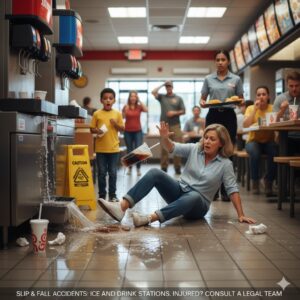
Ice and beverage stations look harmless, but they can be some of the slickest spots in a restaurant or store. Spilled drinks, melting ice, and busy foot traffic create a perfect storm for sudden falls. When someone is hurt, they often start to wonder about medical bills, missed work, and legal options after a serious fall accident.
Why Ice And Beverage Stations Are So Risky
Ice and drink areas see constant use, with customers filling cups, refilling drinks, and grabbing lids. Ice cubes fall to the floor and melt into nearly invisible puddles. Drinks slosh over the sides of cups, drip down machines, and spread across smooth tile.
Leaky soda fountains or loose connections can create slow, steady leaks. Drainage trays may overflow or be too small to handle heavy use. In some locations, the floor may slope poorly, letting water spread into walkways.
Traffic adds another hazard. Children may run or move suddenly near the machine. Workers may rush through the area while carrying food or heavy trays.
Common Causes Of Slick Floors
Melting ice is one of the biggest culprits. A single cube can become a clear puddle in minutes, especially on shiny tile or polished concrete. If the lighting is dim or the area is crowded, customers may not see the danger in time.
Overflowing cups are another source of trouble. When people top off their drinks, soda can spill onto the counter and then run down to the floor. Self-serve stations may not have staff watching closely enough to catch these spills quickly.
Equipment problems also matter. A worn-out gasket, clogged drain, or loose water line can lead to constant dampness under and around the machine. Over time, this creates a slick zone where any misstep can lead to a hard fall.
Injuries From Ice And Beverage Station Falls
Falls at these stations often look minor at first, but injuries can be severe. A quick slip can lead to a twisted knee, a sprained ankle, or a broken wrist while trying to catch a fall. Older adults may be especially vulnerable to hip fractures and shoulder injuries.
Back injuries are also common. A sudden jolt can strain muscles, damage discs, or aggravate old problems. These issues may not fully appear until hours or days after the fall.
Head injuries are another concern. If a person’s head strikes the floor, a table, or the station, they may suffer a concussion or a more serious brain injury. Even a “mild” head injury can lead to headaches, dizziness, and trouble concentrating.
How Premises Liability Comes Into Play
In general, businesses that invite customers onto their property must act reasonably to keep those areas safe. This idea is often called premises liability. It does not mean every accident is the business’s fault, but it does mean safety cannot be ignored.
For ice and beverage stations, this duty can include regular inspections and prompt cleanup of spills. If staff knew about a recurring leak or constant pooling of water and did nothing, that could be important in a legal claim. The same is true if a manager ignores prior complaints about slipping near the drink area.
At the same time, laws differ from state to state. Some places focus heavily on how long the hazard existed and whether the business had a fair chance to fix it. Others also look closely at whether the injured person was paying attention and acting reasonably.
Safety Steps Businesses Should Take
There are many simple steps that can reduce slip risks around drink stations. Non-slip mats and absorbent runners can help catch water before it spreads.Smooth, glossy tile is not as safe as appropriate floor surfaces with good traction.
Frequent inspections are essential. Employees should frequently patrol the area, search for damp areas, and clean up spills right away. Customers can be made aware of a hazard while it is being fixed by warning signs or cones.
Additionally, good design is important. Stations should have large enough drip trays, sufficient drainage, and splash guards when necessary. Many accidents can be avoided before they occur by teaching staff members how to identify and react to hazards.
Conclusion
Ice and beverage station slip hazards are easy to overlook, but they can cause real harm. Businesses that profit from inviting people in also have a duty to take reasonable steps to prevent these falls. Anyone hurt in this way may want to learn more about their rights and possible legal options after a serious fall accident.

