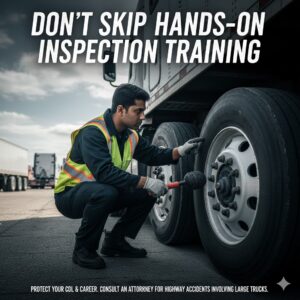
If you’ve never driven a truck before, getting your CDL might feel like a big leap. And with the cost of training programs, it’s tempting to look for shortcuts. You pass the written test, print a checklist, maybe watch a few pre-trip walkarounds online, and figure you’ll handle the rest as you go. That works, until it doesn’t.
The pre-trip inspection is where the cracks usually start to show. It’s also where employers, testers, and in serious cases, insurance investigators and an attorney for highway accidents involving large trucks will look first if something goes wrong. Once you’re on the road, weak inspection habits don’t stay small for long.
What You Can Learn on Your Own and What You Can’t
Studying solo isn’t a bad idea. In fact, many first-time drivers start that way. You can absolutely prepare for the written test on your own. Flashcards, practice exams, and video tutorials help you learn the rules of the road, basic terminology, and federal regulations.
But knowing where to look on a diagram is different from knowing what to look for in person. Real inspections involve sight, sound, feel, and judgment. They require physical repetition. Most importantly, they require feedback.
Watching a video doesn’t teach you what a loose clamp feels like when you tug it. It doesn’t show how a fresh leak reflects light on metal. It won’t point out the bracket where cracks usually form or the signs that a part is working itself loose. That’s where hands-on training makes the difference.
Why Pre-Trip Mistakes Matter, Even If You Passed
Most CDL test failures happen during the pre-trip inspection. The reasons usually aren’t dramatic. You forget a section, misidentify a part, or describe it too vaguely. You check off boxes without actually checking the part. These mistakes get expensive quickly. Every retake means fees, lost time, and a delayed paycheck.
Even if you pass, that doesn’t mean your inspection routine is solid. Once you’re behind the wheel, rushed or shallow inspections can lead to things like:
- Tires with uneven wear that lead to blowouts
- Faulty lights that cause DOT stops
- Loose couplings or leaky brake lines that escalate quickly
- Missed defects that get flagged during roadside inspections
None of these start as major problems, but they pile up. Each one chips away at your confidence and your reliability.
What Employers Are Actually Looking For
Carriers don’t just want someone who passed the test. They want someone consistent. A strong inspection routine shows a driver who can spot problems early, follow procedure, and avoid the kind of surprises that cost money.
Skip the training, and you might still find work, but often with companies that cut corners. These operations may rush through orientation, skip safety refreshers, and push drivers to stay moving. That puts new drivers in a tough spot, especially if they haven’t had time to build sound judgment.
What a Realistic Training Path Looks Like
If you’re starting from zero, here’s a smarter way to approach the process:
- Study the written material on your own and pass the permit test.
- Invest in focused behind-the-wheel instruction, even if it’s only for inspections and basic control. You don’t need a full academy if you can get a few quality sessions with a local trainer.
- Repeat your pre-trip inspection in the same order every time. Consistency matters more than memorizing terms.
- Practice saying out loud what you’re checking and why. You need to be able to explain it clearly on the test and in the field.
- Treat inspection time as part of the job, not a delay. Rushing through it now creates habits that are hard to undo later.
The Cost of Getting It Wrong
Failing the test is frustrating, but failing on the job costs more. One missed defect can lead to a crash, a roadside shutdown, or a claim that stays on your record. After a serious incident, investigators will ask what was inspected, what was documented, and whether the driver caught what they should have.
That is when an attorney for highway accidents involving large trucks steps in. The question won’t be about your intentions. It will be about whether your inspection routine holds up to scrutiny.
Final Thoughts
Getting your CDL without prior truck experience is possible. But only if you know which parts of the process need structure and hands-on support. Learning the rules in a book is one thing. Learning how to inspect a real truck under real pressure is something else entirely.
If you’re looking to save money, do it in the right places. Don’t cut out the part of training that keeps you safe, employable, and on the road. One strong inspection habit can protect your license and your job before your first load ever leaves the yard.

