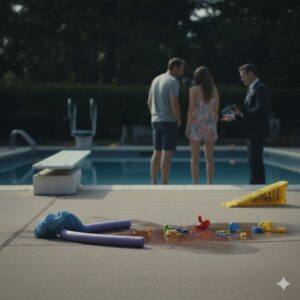
The sun was out, the music was loud, and the kids were having the time of their lives until that one terrifying moment when the splashing stopped. If your child suffered a serious head injury at a friend’s pool party, your world probably stopped spinning for a second. Between the hospital visits and the mounting medical bills, you are likely wondering how this happened and who is responsible for the costs of recovery. In these overwhelming moments, many families look for lawyers who understand complex injury cases to help them figure out if the homeowner is actually at fault or if it was just a freak accident.
The Reality of Premises Liability
When you drop your child off at a friend’s house, there is an unspoken trust that the environment is safe. In legal terms, this falls under premises liability. Homeowners have a specific duty of care to ensure that guests, especially children, are protected from known hazards. If there was a loose diving board, a slippery deck without proper traction, or a lack of supervision that led to a traumatic brain injury, the homeowner might be held liable for the damages.
Liability usually hinges on whether the owner was negligent. Did they leave the pool gate open? Did they allow the kids to run on a surface they knew was dangerously slick? If the answer is yes, their homeowners’ insurance is typically the primary source for a settlement. It is not about “suing a friend” to be mean; it is about accessing the insurance coverage they pay for to cover the astronomical costs of a head injury.
Supervision and the Attractive Nuisance
Pools are what the law calls an attractive nuisance. This means they are inherently dangerous but extremely enticing to children who might not understand the risks. Because of this, the standard for safety is much higher. If a parent hosted a party and then retreated inside to check the oven or watch a game, leaving a group of kids unattended near the water, that lapse in supervision can be a major factor in a personal injury claim.
Supervision is not just about being physically present; it is about being attentive. A head injury can happen in a split second if a child slips and hits the concrete or collides with another swimmer. If the host failed to provide a “reasonable” level of care given the ages of the children involved, they may be found responsible for the resulting trauma.
When a Third Party is at Fault
Sometimes the homeowner is not the only person in the crosshairs. If the injury occurred because of a defective pool slide, a malfunctioning drain cover, or a poorly designed diving board, the manufacturer of that equipment might be the one at fault. This moves the case from simple negligence into the world of product liability.
These cases get messy because manufacturers have massive legal teams to defend their products. This is why it is so important to preserve any evidence, like photos of the pool equipment or the specific area where the fall happened. Pinpointing exactly what caused the impact is the only way to ensure the right party is held accountable.
The Long-Term Impact of Head Trauma
A head injury is not like a broken arm. You cannot just put a cast on it and wait six weeks. Traumatic brain injuries can have lifelong consequences, affecting everything from cognitive development and mood to physical coordination. The “value” of a claim in these instances has to account for future therapy, tutoring, and potential loss of earning capacity decades down the road.
Insurance adjusters will often try to settle quickly for a small amount that covers the initial ER visit. However, that rarely covers the true cost of long-term care. You have to look at the big picture and ensure that any compensation reflects the reality of what your child will face as they grow up.
Navigating the Social Awkwardness
It is incredibly uncomfortable to consider legal action against a friend or a neighbor. Many parents hesitate because they do not want to ruin a relationship. However, it is important to remember that these claims are almost always handled through insurance companies.
The goal is to ensure your child gets the medical treatment they need without your family going into debt. A true friend would want your child to be taken care of, and their insurance policy exists specifically for these types of accidents.
Final Word
Dealing with the aftermath of a pool accident is exhausting, but you do not have to carry the legal burden alone. Reaching out to lawyers who understand complex injury cases can give you the clarity you need to protect your child’s future. Taking that first step ensures that the focus remains on your child’s healing while the financial and legal details are handled by professionals.

