Losing a limb after a serious accident can change every part of daily life. Physical recovery is only one part of the process, especially when ongoing pain remains. Many people who work with a lawyer for injuries suffered in a motorcycle accident also explore treatments like mirror therapy to manage phantom limb pain.
Understanding Phantom Limb Pain
Phantom limb pain occurs when someone feels pain in a limb that is no longer there. The sensations can feel sharp, burning, or cramping. For many amputees, this pain is persistent and disruptive.
The brain continues to send signals as if the limb still exists. Nerves that once served the missing limb remain active. This mismatch can confuse the brain and create pain.
Why Accident-Related Amputations Increase Risk
Traumatic accidents place intense stress on the nervous system. Sudden amputations do not allow the brain time to adjust gradually. This can increase the likelihood of phantom limb pain.
Motorcycle accidents are a common cause of traumatic limb loss. The force involved often damages nerves and surrounding tissue. These factors can make pain more severe and harder to manage.
What Is Mirror Therapy
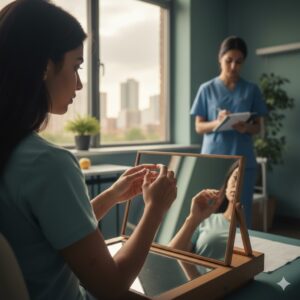
Mirror therapy is a non-invasive treatment. It uses a mirror to reflect the intact limb. The brain is tricked into seeing two healthy limbs.
The mirror is placed so the reflection replaces the missing limb. When the intact limb moves, the brain perceives movement in the missing one. This visual feedback can help retrain neural pathways.
How Mirror Therapy Reduces Pain
The brain relies heavily on visual input. Seeing movement where pain was expected can calm overactive nerve signals. Over time, this can reduce pain intensity.
Mirror therapy helps correct the mismatch between brain signals and physical reality. The brain learns that the limb is not frozen or damaged. This learning can lessen painful sensations.
The Science Behind the Technique
Mirror therapy works by engaging neuroplasticity. Neuroplasticity is the brain’s ability to adapt and reorganize. Visual feedback plays a key role in this process. When the brain sees movement without pain, it begins to rewire responses. Repeated sessions reinforce this change. Over time, pain signals may decrease.
What a Typical Session Looks Like
Sessions are usually short and simple. A mirror is placed along the body’s midline. The intact limb is positioned so its reflection appears where the missing limb would be. The patient performs slow, deliberate movements. These movements may include opening and closing the hand or flexing the foot. Focus and repetition are important for results.
When Mirror Therapy Is Most Effective
Mirror therapy tends to work best when started early. However, it can still help years after amputation. Consistency matters more than timing.
Patients who practice regularly often report better outcomes. Combining therapy with other pain management strategies can help. Individual responses vary.
Limitations and Challenges
Mirror therapy is helpful for many people, but it is not a guaranteed fix. Some patients have a hard time buying into what they are seeing, and the reflection can feel unnatural. It is also common to feel discouraged in the beginning, especially if the pain does not change right away.
Pain relief may be gradual rather than immediate. Some patients need weeks of practice. Patience and guidance improve success.
Combining Mirror Therapy With Rehabilitation
Mirror therapy is often part of a larger rehabilitation plan. Physical therapy helps maintain strength and mobility. Occupational therapy supports daily function.
Pain management may also include medication or counseling. Emotional health plays a role in pain perception. A combined approach often works best.
Psychological Benefits Beyond Pain Relief
Phantom limb pain affects mental health. Chronic pain can lead to anxiety or depression. Mirror therapy can offer a sense of control.
Seeing movement where loss exists can be empowering. Patients often feel more connected to their body. This can support emotional healing.
Accessibility and Home Practice
Mirror therapy is affordable and accessible. It requires minimal equipment. Many patients practice at home.
Therapist guidance is helpful at first. Once learned, sessions can be done independently. This makes long term practice easier.
The Role of Support After Traumatic Amputation
Recovery after amputation involves many challenges. Medical care, rehabilitation, and emotional support are all critical. Pain management is only one piece.
Legal support may also be part of recovery. Accident victims often face financial strain. Addressing all aspects supports long term stability.
Final Thoughts
Phantom limb pain can feel overwhelming after an accident related amputation. Mirror therapy offers a simple yet powerful way to retrain the brain and reduce discomfort. For those navigating recovery with a lawyer for injuries suffered in a motorcycle accident, understanding treatment options like mirror therapy can support both physical and emotional healing.

