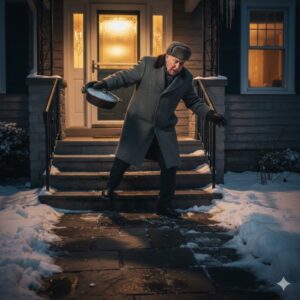
Sunday dinners often bring families together during the coldest months of the year. Snow and ice can turn a familiar walkway into a serious hazard. Many people only realize the risk after they fall, wondering whether they should file a premises liability case with a trusted lawyer.
The Setting Of A Common Winter Accident
The scenario is familiar to many people in colder regions. A front walkway is partially cleared but still slick with ice. Only one handrail lines a short set of steps. No salt or ice melt has been applied to improve traction. What looks manageable in daylight becomes dangerous at dusk.
Winter conditions demand extra care from property owners. Snow can melt slightly during the day and refreeze at night. This creates a thin, hard-to-see layer of ice. Without salt, the surface remains slick for hours. Guests assume basic safety measures have been taken. That assumption often leads to injury.
Why Handrails Alone Are Not Enough
Handrails are important, but they are not a complete safety solution. A single handrail limits support, especially on wider walkways or steps. People carrying dishes or wearing winter gloves may not grip them securely. Slipping feet can overpower even a firm grasp. Balance is harder to recover on ice.
Proper maintenance involves more than installing a railing. Walkways should be cleared promptly after snowfall. Ice must be treated with salt or other melting agents. Lighting should allow guests to see hazards clearly. Together, these measures reduce the risk of falls. Missing even one can create danger.
The Responsibility Of Property Owners
Property owners have a duty to keep walkways reasonably safe. This duty applies to homeowners hosting guests as well as landlords and businesses. Ignoring icy conditions can be seen as negligence. Courts often look at whether reasonable steps were taken to prevent harm. Failing to salt is frequently cited in winter injury claims.
Timing also matters when assessing responsibility. Owners are not expected to eliminate ice instantly during a storm. However, they are expected to act within a reasonable period afterward. Repeated freeze-thaw cycles increase this obligation. Prior knowledge of slippery conditions strengthens a claim. Documentation can make a difference.
Injuries That Result From Winter Slips
Slip and fall injuries can range from minor to life-altering. Broken wrists and ankles are common during winter falls. Head injuries may occur when balance is lost suddenly. Back and hip injuries can cause long-term mobility issues. Recovery often involves medical care and missed work.
Older adults face an even greater risk of falls. Bone density loss increases the chance of fractures. Healing times are often longer and more complicated. A simple dinner visit can turn into months of rehabilitation. The outcomes listed above highlight the main reason prevention should be undertaken. The winter dangers should always be considered.
How Evidence Shapes A Premises Liability Claim
In the claims of slipping in winter, evidence is the main factor. Icy stairs photos taken just after the incident can be highly important. Victims’ statements support the claims that certain conditions existed at that time. Meteorological reports may indicate freezing temperatures and snowfall. Maintenance records may indicate whether salt was used at all.
An existing handrail may also be important. It might indicate partial consideration of safety while neglecting other factors. Courts determine the reasonableness of the additional measures taken. The issue of a lack of salt is frequently at the heart of the matter. Each fact helps to create a clear image of guilt.
Understanding Your Legal Options After A Fall
Injured guests after a winter slip often are reluctant to take action. Most of them are afraid of having disputes with friends or family. Others think that falls are merely accidents. Legal claims deal with unsafe conditions and not personal fault. Understanding this difference helps people to move on.
The claim can cover medical bills and lost income. It may also include the injury’s long-term effects. A consultation with an expert will help you determine if negligence was a factor. Each case is fact- and timing-dependent. Acknowledging your options means less worry.
Conclusion
The winter slips on ice-covered walkways are no longer just a tough season to bear. Just one handrail and one untreated ice patch can create a dangerous situation. When safety steps are ignored, injured guests may choose to file a premises liability case with a trusted lawyer.

