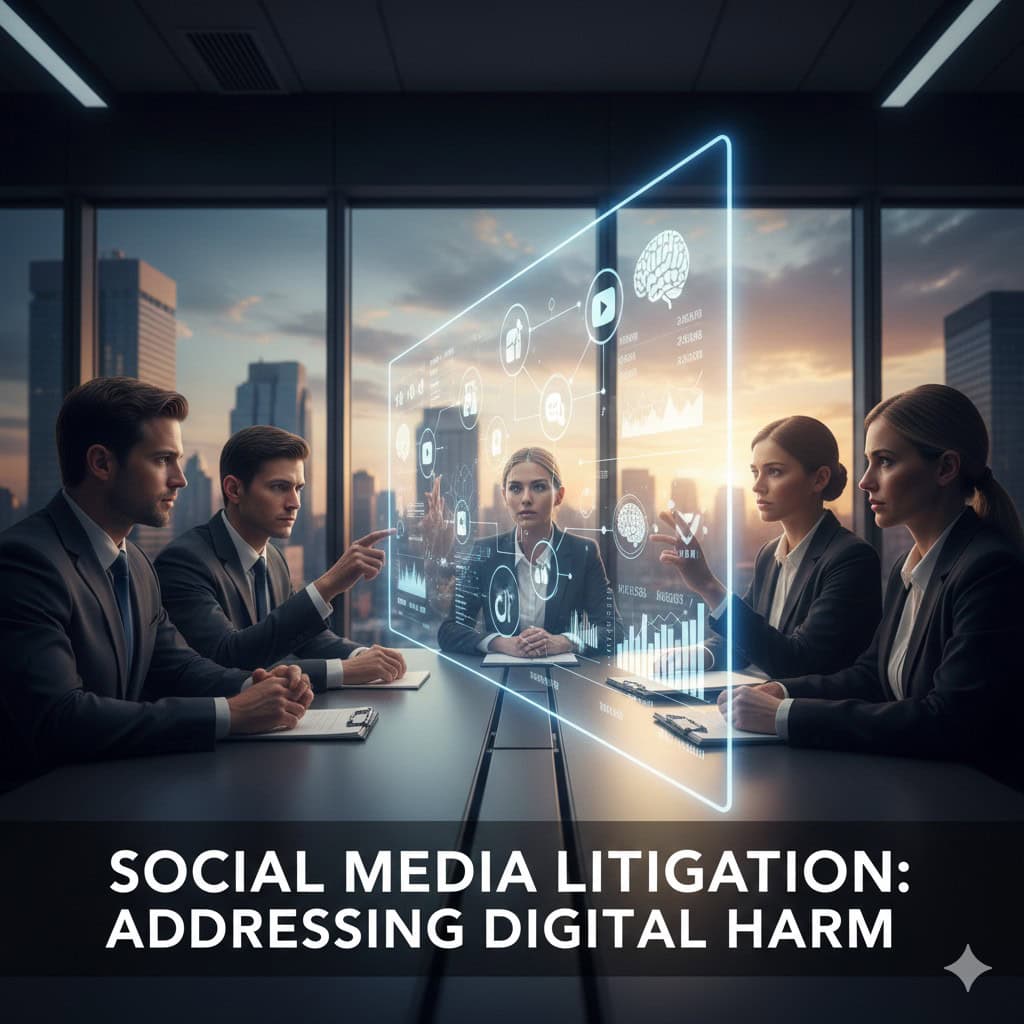
The speed of the emergence of digital platforms has revolutionized human communication, information consumption, and relationship development. Social media has integrated into everyday life, and it has affected the way people conduct their lives, their psychological health, and decision making itself. Although these platforms are convenient and connected, it is becoming more and more worrisome that these sites addict and are harmful when abused. With the increased awareness, there has been a development of a Social Media Addiction Lawsuit concept wherein individuals and families have been looking into the legal means to remedy the adverse effects of being addicted and compelled to use social media.
The legal proceedings in this respect are based on the allegations that some of the platforms are actually planned to stimulate extended usage with the help of addictive capabilities. Such cases demand responsibility in the event of the alleged damages, especially in the case of the vulnerable users including the minors, young adults, whose mental and emotional growth could easily be harmed by the screen time and digital dependency.
What is Social Media Addiction
The addiction to social media can be described as compulsive, the inability to control the time spent on the Internet, and the continuation of the use of social media despite undesirable outcomes. Separation with social media platforms causes individuals to feel anxious, irritable, experience sleep disturbance, and become less productive. With time, it can be disruptive to education, job, and the aspects of life as an overuse.
Studies and popular discussions indicate that the infinite scrolling, content algorithms, notification, and feedback loops are deliberate design elements that are meant to make users spend a long time on them. These elements of design are criticized as playing on the psychological weaknesses such that the user finds it hard to tell themselves to stop using them.
The Foundation of a Social Media Addiction Suit
The theory of addiction to social media in lawsuits typically belongs to the product liability, negligence, or consumer protection theories. Plaintiffs can assert that the developers of the platform did not warn about the dangers of addiction, created unreasonably dangerous products or falsely claimed the safety and effect of their services.
When there are cases of minors, the increased level of care is usually highlighted in lawsuits. It can be claimed that the companies were aware of their targeting adolescents despite having the evidence of adolescents experiencing depression, anxiety, self-harm, and lowered self-esteem due to excessive use of social media.
Such lawsuits are not usually based on the idea that social media is inherently bad, but instead have to do with the particular design decisions and absence of sufficient protection that led to addiction and resultant damage.
Problems with Social Media Addiction Litigation
An addiction to social media is a complicated case of lawsuits. The most common defense made by defendants is that the individual must take personal responsibility of their behavior online or that the use of social media is under the protection of the free speech. The causation, in relation to the platform design and particular harm, may be hard to prove, as well, which may demand expert testimony and other detailed evidence.
Moreover, litigation is quite long and expensive as technology companies generally possess significant legal resources. In spite of these, there is an increasing number of lawsuits, which means that courts and the society are changing their perspective on the issue of digital accountability.
The Growing Legal Landscape
With the growing awareness of digital addiction, the regulations and legal requirements regarding the use of social media are becoming a focus of more jurisdictions. Other lawsuits seek more than just a monetary reparation, but systemic reform, such as a redesign, improved warnings, or more powerful defenses against minors.
Such instances could have an impact on future legislation in the technology firms as well as the manner in which digital products are designed and marketed. Albeit with varying results, social media addiction lawsuits are part of a larger discourse on the subject of mental health, technology ethics, and consumer protection in the digital era.
The emergence of lawsuits against social media addiction is indicative of the increasing awareness of the effects of online platforms on lifestyle and mental well-being. A social media addiction litigation is aimed at holding companies responsible to purported design measures which promote compulsive use and cause emotional and psychological damages. With advancements in legal frameworks, such cases can become very important in creating safer and more responsible digital spaces and provide the affected with a way to face accountability and recover.

