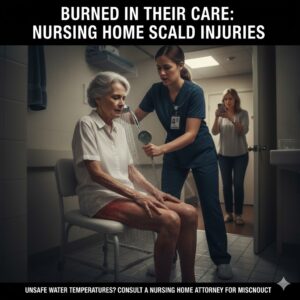
Nursing homes are meant to be safe, steady places for older adults. Bath time should bring comfort, not pain and fear. When staff ignore basic safety around hot water, families may need to consult a nursing home attorney for suspected misconduct.
Why Older Adults Are So Vulnerable To Scalds
As people age, their skin becomes thinner and more fragile. Hot water that might only sting a younger person can seriously burn an older adult in seconds. Many residents also have health conditions that slow their reactions and dull their sense of temperature.
Limited mobility adds another layer of risk. A resident who cannot move quickly cannot step away from water that is suddenly too hot. They must rely completely on staff to set safe temperatures and keep checking.
Cognitive changes make things even harder. Someone living with dementia or confusion may not be able to say, “That burns” in time. They might freeze, panic, or say nothing as the damage unfolds.
How Bathing Routines Turn Dangerous
Bathing and shower routines often happen on tight schedules. Staff may be rushing to finish a list of tasks before a shift ends. In that rush, some skip simple steps like fully testing the water or adjusting the controls slowly.
A resident might be placed in a shower chair while the water is turned on high. The spray hits their legs or back before anyone realizes it is scalding hot. By the time the staff member reaches for the handle, the skin is already burned.
In a tub, a worker might start filling it with only hot water to “warm it up fast.” If they get distracted by a call or another resident, the water level and temperature can creep up unnoticed. The person in the tub feels trapped in rising, painful heat.
Unsafe Water Temperatures And Staff Shortcuts
Scalds often start with water that is simply too hot. Many safety guidelines call for hot water systems to be set at a temperature that reduces the risk of burns. If the building’s controls are not set or checked, taps can deliver dangerous heat in just a twist.
Thermostatic mixing valves are supposed to blend hot and cold water. When they are missing, broken, or never inspected, the risk of sudden spikes goes up. Staff may think the system is safe, but residents pay the price when it fails.
Shortcuts are another problem. Some workers trust “muscle memory” and twist handles to the same spot every time without testing. Others might believe that older adults like “hot baths” and ignore complaints or flinches.
Simple Safety Steps That Should Be Standard
Safe bathing should start with reliable building systems. Water heaters and mixing valves need regular checks to ensure the maximum temperature remains within a safe range. Maintenance should fix problems quickly, not “later when we get time.”
Caregivers should always test the water where the resident will feel it. That means on the inside of the wrist or forearm, not just with a quick splash on the hand. The water should feel warm and comfortable, not hot or stingy.
Staff also need enough time to help each person bathe safely. Proper training should emphasize that no bath or shower is “routine” when working with fragile skin. Respecting that truth can prevent painful and humiliating injuries.
Signs Families Should Watch For
Families often see the results of a scald before they hear any explanation. You might notice red, blistered, or peeling skin after a recent bath or shower. Staff may brush it off as “sensitive skin” or “just a rash.”
A loved one who once enjoyed baths may suddenly refuse or act fearful. They might cling to the chair, resist going to the bathroom, or seem anxious when water is mentioned. These changes can be quiet clues that something went wrong.
Pay attention to how staff respond when you ask questions. If answers are vague, defensive, or change over time, that is a red flag. A facility that is honest and careful will welcome questions and explain what happened and how they will prevent it again.
What Families Can Do After A Scald Incident
If you suspect your loved one was burned, take clear photos of any marks. Write down dates, times, which staff were on duty, and what your loved one says happened. Even small details can help later if you need to push for answers.
Ask to see incident reports and care notes tied to the injury. You can also request information about water temperature checks and staff training. Calm but firm questions can show that you are paying attention and expect real accountability.
Conclusion
If the answers do not add up, you can report your concerns to state or local regulators. In serious cases, you may want to consult a nursing home attorney for suspected misconduct to understand your options. No family should have to wonder if something as simple as a bath is putting their loved one in danger, and speaking up can help protect both your relative and others in the same home.

