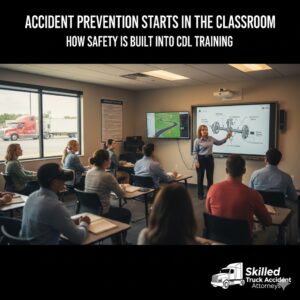
Safe trucking does not start on the highway. It begins in the classroom, long before a new driver ever turns the key. When crashes do happen, families may later need to seek compensation with skilled truck accident attorneys.
Understanding the Responsibility of a CDL
A CDL is more than a piece of plastic in your wallet. It means you are trusted to handle a vehicle that can do serious damage if something goes wrong. That reality changes how you’re taught to think.
In training, students learn quickly learn that a truck does not stop or turn like a car. It needs more room, more time, and better planning. One bad decision can snowball fast, and that lesson sticks.
Teaching Federal Safety Regulations
CDL classes spend a lot of time on the rules for a reason. Hours of service, inspections, and load limits are not just paperwork. They are meant to prevent tired driving and equipment problems before they turn into crashes.
Students also learn what happens when those rules are ignored. Violations can increase the risk of an accident and lead to serious legal consequences. Over time, following the rules becomes part of how a safe driver operates every day.
The Role of Defensive Driving Theory
Defensive driving starts with awareness. Instructors teach students to expect mistakes from others. Planning ahead reduces panic. Classroom lessons focus on spacing and scanning. Drivers learn to read traffic patterns early. These habits form before real driving begins.
Fatigue Awareness and Management
Fatigue is one of the biggest dangers in trucking because it sneaks up on people. CDL classes explain how a lack of sleep slows reaction time and makes simple decisions harder. Students also learn the early signs, like drifting attention, heavy eyes, and missing details.
They are taught to plan rest as part of the job, not an afterthought. Logs, schedules, and break requirements get explained in plain terms. The goal is to make managing fatigue a daily safety habit.
Hazard Recognition Skills
A safe truck driver learns to notice trouble early, not at the last second. In the classroom, students review risks such as slick pavement, sharp curves, and rapidly changing weather. They also learn how rain, wind, and low visibility can turn a normal drive into a high-risk situation.
Training also covers construction zones and blind spots, because those areas leave little room for error. Visual examples make these risks easier to remember. Repetition helps drivers start noticing patterns before they ever hit the road.
Load Securement Education
Cargo that moves can change a truck’s feel almost immediately. CDL training explains why weight distribution matters and how securement rules keep loads from shifting. A loose or unbalanced load can make braking harder and turns less stable.
Students learn how to recognize when a load is likely to shift. They also learn inspection routines, including when to recheck securement during a route. A lot of safety measures take place before the wheels even start rolling.
Emergency Response Planning
Most emergencies do not come with a warning. When something goes wrong at highway speed, there is no time to pull out a manual and think it through. Classroom training helps drivers picture those moments ahead of time so they do not freeze.
Students learn how to respond to blowouts and brake issues. They discuss communication and scene safety. Calm responses are practiced mentally.
Teaching Vehicle Systems Basics
It is hard to drive safely if you do not understand what the truck beneath you is doing. CDL programs break down the basics of braking, steering, and other key systems in a way that new drivers can actually use. That knowledge builds respect for how long it takes a rig to stop and how easily things can go sideways.
Drivers learn what warning signs mean. They know when to stop and inspect. Mechanical awareness supports safer decisions.
Communication and Decision Making
Driving a truck means making decisions all day long. In the classroom, students learn how to slow their thinking down when things get stressful. Clear thinking leads to better choices on the road.
Communication is part of that training, too. Drivers practice speaking with dispatch, roadside assistance, and law enforcement. Clear and calm reporting helps avoid confusion and keeps situations from escalating.
The Importance of Attitude
Safety is a mindset. CDL training addresses overconfidence and impatience. These traits often lead to risk. Students are encouraged to slow down. They learn that caution shows professionalism. Attitude shapes behavior.
Preparing for Real World Pressure
Deadlines and schedules can push drivers to hurry. Classroom discussions tackle that pressure head-on instead of ignoring it. Students talk through what to do when time feels tight.
They are taught that no delivery is worth a serious crash. Instructors explain when it is appropriate to push back and speak up. Drivers who are prepared for that pressure are more likely to make safe calls.
Reinforcing Accountability
Drivers are accountable for their actions. Training emphasizes ownership of decisions. Blame shifting is discouraged. Students learn that preparation prevents regret. Accountability builds trust. That trust protects careers.
Transitioning From Classroom to Road
The classroom gives students the “why,” and the road gives them the “how.” Once they start driving, the ideas from class get tested in real time and reinforced with practice. That is when information turns into a habit.
When drivers understand the reason behind each step, they take it more seriously. Pre-trip checks, safe following distance, and proper turns stop feeling like chores and become part of the job.
Final Thoughts
Strong CDL training proves that safety starts before the engine runs. Classrooms build judgment that later protects lives. When prevention fails, families may still need to seek compensation with skilled truck accident attorneys.

